Most people think booking a pet-friendly hotel is as simple as ticking a box on Expedia. It’s not. I’ve been road-tripping across the USA with my border collie for six years, and I’ve learned that “pet-friendly” can mean anything from a dedicated dog park to a $100 fee for a room that smells like wet carpet. Here’s what actually works.
Why Most Booking Sites Lie About Pet Policies
The problem starts with the filters. Sites like Booking.com and Hotels.com let you check “pets allowed,” but that filter catches hotels where only two rooms out of fifty accept dogs, or where the policy changed last week. I’ve shown up at three different “pet-friendly” hotels where the front desk said, “Oh, we stopped that last month.”
Here’s what those filters don’t tell you:
- Weight limits — many cap at 25 lbs. My 55-lb dog gets rejected constantly.
- Breed restrictions — pit bulls, rottweilers, and sometimes even huskies get blocked.
- Number of pets — some only allow one animal.
- Where the pet can be — left alone in the room? Usually no. In common areas? Depends.
The fix: never trust the filter. Call the hotel directly and ask three questions — weight limit, breed restriction, and total pet fee (not deposit). I do this for every single booking now.
The Two Websites I Actually Use Every Trip

After dozens of bad experiences, I narrowed it down to two sources I trust. Both are free.
BringFido
BringFido is the most accurate pet-friendly database I’ve found. They list over 300,000 properties in the USA, and each listing tells you the exact fee, weight limit, and whether your dog can be left alone. They also show nearby dog parks and vet clinics — useful when your dog eats something weird in a rest stop parking lot. I use their mobile app on the road.
GoPetFriendly
GoPetFriendly has fewer properties but better road trip tools. Their Trip Planner lets you map a route and see pet-friendly stops along the way. I used it last summer to drive from Denver to Seattle — it showed me a dog-friendly brewery in Boise and a hiking trail near Spokane that wasn’t on any other map. The site also has a blog with real traveler reviews, not marketing fluff.
I cross-reference both. If a hotel appears on BringFido with good reviews and on GoPetFriendly’s route planner, I book it.
Three Hotel Chains That Never Let Me Down
Independent motels are a gamble. Chains are predictable. After years of testing, these three chains consistently deliver fair policies without hidden fees.
| Chain | Pet Fee | Weight Limit | Key Perk |
|---|---|---|---|
| La Quinta | $0 (no fee) | None | Free breakfast, easy parking |
| Motel 6 | $0 (no fee) | None | Ground-floor rooms, pet relief areas |
| Red Roof Inn | $0 (no fee) | None | Consistent policy across all locations |
La Quinta is my first choice for longer stays. No fee, no weight limit, and their rooms are clean enough. Motel 6 works for quick overnight stops — the rooms are basic but the ground-floor access means I don’t carry my dog up stairs. Red Roof Inn is the most consistent chain I’ve used. Every location follows the same policy, which is rare in this industry.
Kimpton Hotels also allow pets with no fee, but they’re pricier ($200+/night) and more common in cities than along interstate highways. Worth it for a splurge night.
What to Do When Every Hotel Near You Is Full

This happens. Holiday weekends, summer vacations, random events. You’re stuck in a small town at 9 PM with a tired dog and zero vacancies. I’ve been there three times. Here’s my backup plan.
First, check KOA campgrounds. Many have cabins with heat and electricity that allow dogs. A basic cabin costs $60–$90 a night, which beats sleeping in the car. I stayed in a KOA cabin outside of Moab, Utah when every motel was booked — it had a bed, a mini-fridge, and a fire pit. My dog loved it more than any hotel room.
Second, look for extended-stay hotels like Extended Stay America or WoodSpring Suites. They often have last-minute availability because business travelers cancel. Their pet policies are usually more relaxed than standard hotels.
Third, use Hotels.com and filter by “pet-friendly,” then call the top three results. I’ve found rooms at 2 AM this way that weren’t showing on any booking site. Front desk staff know about cancellations before the website updates.
Three Mistakes That Cost Me Money and Sleep
I’ve made every mistake. Here are the ones to avoid.
Mistake 1: Not Reading the Pet Fee Fine Print
A “$50 pet fee” sounds reasonable. But some hotels charge per pet, per night. A three-night stay with two dogs becomes $300. Others charge a “cleaning fee” on top of the pet fee. I now ask: “What is the total additional charge for my dog, for the entire stay, including all taxes and fees?” Get it in writing.
Mistake 2: Assuming Your Dog Can Be Left Alone
Most pet-friendly hotels require your dog to be crated if you leave the room. If you don’t travel with a crate, you’re stuck ordering room service or taking turns sitting in the parking lot. I bring a collapsible crate for this reason. It’s a hassle, but it beats getting a call from the front desk about your dog barking.
Mistake 3: Booking the Cheapest Room Online
Discount booking sites often route you to the oldest, dirtiest rooms in the hotel. I’ve been put in a basement room with moldy carpet and a window that didn’t open. Book directly through the hotel’s website or call the front desk. Ask for a ground-floor room near an exit — easier for bathroom breaks and less disruptive to other guests.
When a Vacation Rental Beats a Hotel
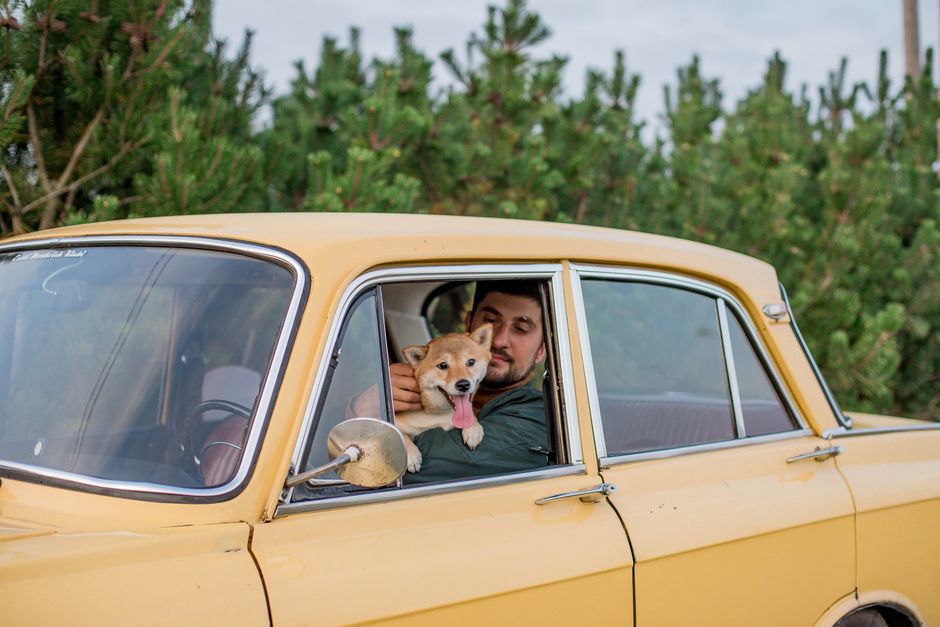
Sometimes a hotel doesn’t make sense. If you’re staying more than three nights in one place, or traveling with multiple dogs, a vacation rental is often cheaper and more comfortable.
I use VRBO with the “pets allowed” filter. Airbnb also works, but VRBO’s filter is more reliable — hosts must explicitly allow pets, not just “consider” them. I look for properties with fenced yards and hard floors (no carpet to stain).
The tradeoff: no front desk. If something breaks, you’re dealing with a remote host. I always message the host before booking and ask: “Is the yard fully fenced? Are there any breed or weight restrictions? Is there a pet fee or deposit?” If they don’t respond within 24 hours, I move on.
Vacation rentals work best for national park trips. Hotels near parks charge $250+ and have strict pet rules. A cabin near the entrance costs the same and gives your dog a yard. I did this near Yellowstone last year — $180 a night for a cabin with a fenced yard versus $220 for a cramped motel room with a “no dogs left alone” rule.
My Exact Booking Process for Any Road Trip
Here’s the system I use every time. It takes 20 minutes and has never failed me.
- Map your route using Google Maps. Identify towns where you’ll need to stop — one every 4–5 hours of driving.
- Check BringFido for each town. Sort by rating. Read the last five reviews mentioning pets.
- Cross-reference with GoPetFriendly to find nearby dog parks or restaurants with patios.
- Call the hotel. Ask: “What is the total fee for one dog for one night? Any weight or breed restrictions? Can the dog be left alone in the room?”
- Book directly on the hotel’s website, not a third-party site. Use a credit card with travel protections.
- Confirm 24 hours before — call again and verify the pet policy hasn’t changed. This has saved me twice.
That’s it. No magic. Just a repeatable process that filters out the bad options before you waste a night at a motel that charges $100 for a dog that’s 5 pounds over the limit.
For the record: La Quinta is my top pick for budget stays, Kimpton for a splurge, and KOA cabins for emergencies. BringFido is the best booking tool. GoPetFriendly is the best route planner. Everything else is a gamble.