Northwest Arkansas National Airport (XNA) has a pricing problem most leisure travelers never see coming. Walmart’s global headquarters, Tyson Foods, and J.B. Hunt all operate within 20 miles of the terminal — which means business travelers fill seats at full fare year-round. That corporate demand sets a floor on leisure pricing that comparable regional airports simply don’t face. Average one-way domestic fares from XNA hover around $280–$340, versus $190–$230 at Tulsa (TUL) or Springfield (SGF).
That gap doesn’t mean cheap flights from XNA are impossible. It means you have to know which carrier to book, when to pull the trigger, and when it makes more sense to drive.
Airlines at XNA: What the Real Price Differences Look Like
Five carriers operate scheduled service at XNA. Their pricing models, hub networks, and fee structures diverge sharply — choosing the wrong one for your route can add $80–$150 to total trip cost before you’ve selected a seat.
The Current Carrier Lineup
American Airlines dominates departures at XNA, with the deepest schedule and strongest connection network through Dallas-Fort Worth (DFW) and Chicago O’Hare (ORD). Delta connects through Atlanta (ATL) and Minneapolis (MSP). United runs through Houston (IAH) and Denver (DEN). Southwest operates a thinner schedule but holds a consistent cost advantage for leisure travelers — no change fees, no baggage fees on two checked bags, and lower base fares on overlapping routes.
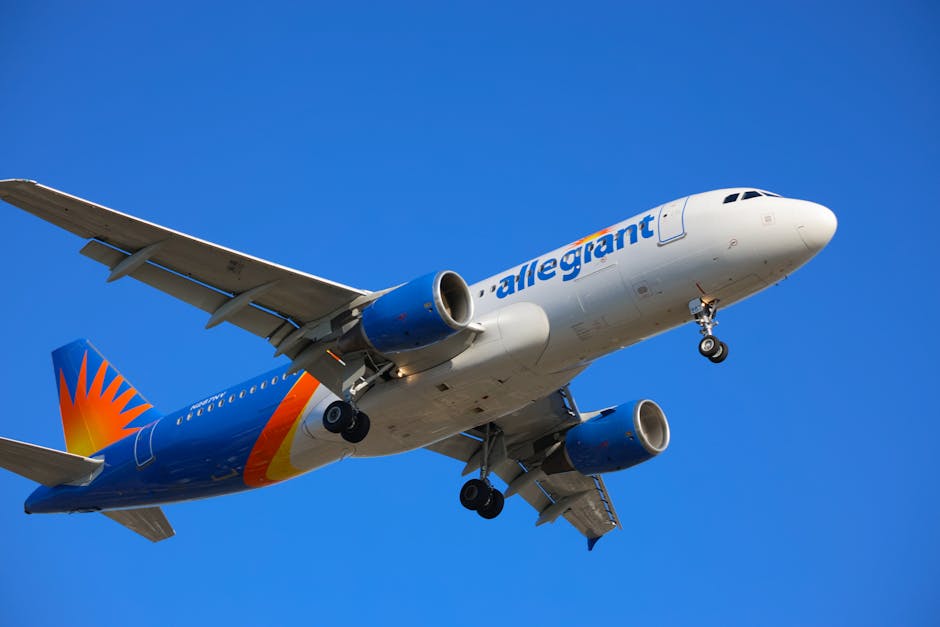
Allegiant Air added XNA routes in recent years, targeting leisure destinations like Las Vegas (LAS), Orlando-Sanford (SFB), and Tampa (PIE). Allegiant’s advertised base fares can look extraordinary — sometimes $49–$79 one-way — but the ancillary fee structure is aggressive. A carry-on bag runs $20–$50. Seat selection adds $15–$80. Pay with a credit card and there’s a convenience fee. By the time you’re done clicking through the booking flow, you’re often back near mainstream carrier prices.
| Airline | Main Hubs from XNA | Typical Base Fare (one-way) | Carry-On Fee | First Checked Bag | Best For |
|---|---|---|---|---|---|
| American Airlines | DFW, ORD | $180–$380 | Free (basic economy excluded) | $35 | East Coast connections, international |
| Delta Air Lines | ATL, MSP | $190–$350 | Free (basic economy excluded) | $35 | Southeast, Northeast connections |
| United Airlines | IAH, ORD, DEN | $185–$370 | Free (basic economy excluded) | $35 | West Texas, West Coast connections |
| Southwest Airlines | MDW, DAL, DEN | $140–$280 | Free | Free (2 bags) | Leisure travelers, families |
| Allegiant Air | LAS, SFB, PIE | $49–$129 base only | $20–$50 | $20–$50 | Budget leisure, carry-on only travelers |
Southwest’s Real Advantage at XNA
For most leisure travelers, Southwest wins on total cost — not just sticker price. Two free checked bags per passenger saves a family of four $140–$280 round-trip compared to American or Delta. That alone frequently outweighs any difference in base fare. The critical catch: Southwest doesn’t appear on Google Flights, Kayak, or Expedia. If you only search aggregator sites, you’ll never see their prices. Check southwest.com directly — every time, without exception.
Southwest’s Wanna Get Away fares from XNA to Denver consistently hit $99–$139 one-way when booked 3–6 weeks out. American’s equivalent fare on the same route, after adding a checked bag, typically runs $185–$240. That’s not a close race.
The Corporate Demand Problem Is the Whole Explanation
Bentonville is a vendor city. Thousands of supplier companies maintain regional offices there specifically to stay close to Walmart’s buying teams. Those vendors fly on corporate accounts, book within two weeks of travel, and are completely indifferent to price. Airlines price accordingly. If you’re a leisure traveler at XNA, you’re competing for the same seat inventory as expense-account fliers. Book early, or absorb the premium.
Booking Windows at XNA: Why the Timing Is Tighter Than You’d Expect
Standard domestic booking advice — book 4–8 weeks out for the best fares — applies at XNA, but the window is narrower and the drop-off is sharper. Business travelers fill close-in inventory quickly, so airlines pull their discounted fare buckets faster than at airports with stronger leisure demand bases.
The 3-to-6-Week Window for Domestic Routes
For core routes (XNA to DFW, ATL, ORD, DEN), the lowest fares consistently surface 21–42 days before departure. Booking at 8+ weeks out often doesn’t buy you the deep discount you’d expect at a major leisure hub, because revenue management systems on these routes haven’t released their bottom fare buckets yet. Booking inside 14 days is almost always a mistake — $400–$600 one-way fares appear routinely on routes that would have sold for $160–$200 six weeks earlier.
Allegiant is the exception. They run email-list-exclusive flash sales with 48–72 hour windows that apply to flights 30–90 days out. If Allegiant’s leisure destinations interest you, subscribe to their email list and check it consistently. That’s where their genuine discounts live.
Walmart Calendar Events Drive Unusual Demand Spikes
This is the piece most travel booking guides miss entirely. Walmart’s Supplier Summit and Shareholder Week (typically held in early June) generate a demand surge at XNA that rivals Thanksgiving at major airports. Seats disappear fast and prices spike hard. If your travel dates overlap with any large Bentonville corporate event, book at minimum 90 days out — or expect to pay $500+ for routes that normally price at $200. The same logic applies to the National Retail Federation conference window in January, which moves heavy vendor travel through the region.
Standard holiday periods — Thanksgiving week, Christmas, Spring Break — follow national pricing patterns. Book 8–10 weeks out for those or you’ll pay full freight on whatever’s left.
Tuesday vs. Friday Departures: Does Day of Week Matter Here?
More than at most regional airports, yes. Friday afternoon departures carry a measurable business-travel markup at XNA because consultants and vendor reps want to fly home for the weekend. The XNA-to-ORD Friday 4pm departure regularly prices $60–$100 higher than the Tuesday 7am on the same route. For flexible leisure travelers, Tuesday and Wednesday morning departures from XNA consistently produce the lowest available fares across all carriers.
Nearby Airports Worth the Drive — Run the Numbers Before You Decide
This is where XNA-area travelers reliably leave money behind. The metro sits within practical driving distance of four airports that frequently offer lower fares on the same competitive routes. The math depends on party size, savings magnitude, and parking costs — but the comparison is worth running every time.
- Tulsa International (TUL) — 90 minutes south on I-44. The strongest alternative for most routes. TUL has fuller Southwest service, and on routes where both airports compete (DFW, DAL, DEN), TUL fares run $40–$90 cheaper per person. For a family of four round-trip, that’s $320–$720 in savings against roughly $30–$40 in gas and $8/day parking versus XNA’s $15/day rate. The break-even for two passengers is around $50–$60 in per-person fare savings.
- Springfield-Branson National Airport (SGF) — 90 minutes northeast on I-44. Smaller and with thinner schedules, but worth checking for American’s DFW and ORD connections. SGF occasionally prices significantly below XNA on leisure routes where American wants to fill seats.
- Will Rogers World Airport, Oklahoma City (OKC) — 3 hours south. Too far for most trips unless savings exceed $150 per person one-way. OKC has the widest carrier variety of any nearby alternative, including Southwest’s full route network plus seasonal Frontier and Spirit service. The math works for large groups or when OKC has a rare competitive sale on a route XNA prices high.
- Bill and Hillary Clinton National Airport, Little Rock (LIT) — 3 hours east on I-40. Check LIT specifically for Delta routes to Atlanta and the Southeast, where LIT sometimes prices $50–$90 below XNA on the same connection. Not practical for most travelers, but occasionally compelling for Southeast-bound trips.
The practical rule: if TUL saves $50+ per person one-way, drive. Under that threshold, the time cost doesn’t pencil out for most travelers. For trips with multiple passengers, that break-even drops and TUL becomes the right call more often than not.
Fare Tracking Tools: Use Google Flights First, Then Southwest Manually
Google Flights price tracking is the right primary tool for XNA searches — not because it’s the most sophisticated, but because it covers every carrier at XNA except Southwest and delivers email alerts when fares shift materially. Set a route alert, then manually check southwest.com every 7–10 days. That two-tool combination covers essentially the entire XNA fare market.
Google Flights Price History Graph
The fare history graph on Google Flights is genuinely useful at XNA. It shows 90 days of fare history for a given route, which tells you whether the price you’re seeing is at or near the historical floor or if it’s elevated. On the XNA-to-Denver corridor, for example, Google’s graph typically shows a range from $140 (sale territory) up to $380 (close-in business pricing). Seeing $175 when the floor has historically been $140 means you’re looking at a reasonable but not exceptional deal. Seeing $175 when the historical average is $310 means buy immediately.
Hopper for Buy-Now-or-Wait Decisions
Hopper’s prediction model gives a buy-now versus wait recommendation with a stated confidence level. For XNA routes, Hopper is reasonably accurate 6–8 weeks out, less reliable inside two weeks. Use it as a second opinion when you’re uncertain whether to pull the trigger on a current fare — if Hopper says “prices unlikely to drop, buy now” at 80%+ confidence, that signal is worth weighing. Don’t use Hopper as your primary search engine; its route coverage is sometimes inconsistent on smaller regional airports.
Going (Formerly Scott’s Cheap Flights) for Error Fares
Going’s free tier delivers alerts for mistake fares and deep sale pricing. XNA appears in Going alerts less frequently than major airports, but the deals it surfaces are real when they do show up — $180 round-trip to London through a transatlantic positioning fare, $150 to Cancún through Dallas, that kind of thing. The paid tier ($49/year) sends alerts faster. For flexible travelers who can shift travel dates around a deal rather than finding deals around fixed dates, that subscription pays for itself on a single good alert per year.
Where XNA Prices Competitively and Where It Doesn’t
Routes Where XNA Actually Holds Up
XNA is cheapest and most competitive on its direct hub connections — DFW, ATL, and ORD — because high flight frequency and multi-carrier competition keep pricing in check. XNA-to-DFW one-way fares regularly hit $89–$129 on American and $99–$139 on Southwest with 3–6 weeks of advance booking. That’s genuinely good pricing for a sub-60-minute flight. Denver is another strong route: Southwest’s Wanna Get Away fares hit $99–$149 one-way with advance purchase, competitive with any regional airport in the country.
Where XNA Consistently Overcharges
West Coast routes from XNA are painful. XNA-to-LAX and XNA-to-SEA require connections and face thin carrier competition — expect $280–$450 one-way without a flash sale. For those routes, driving to TUL first or positioning through DFW on a separate cheap short-haul ticket is often the better strategy.
| Route | Typical XNA Fare (one-way) | Typical TUL Fare (one-way) | Drive to TUL Worth It? | Best Carrier from XNA |
|---|---|---|---|---|
| → Dallas (DFW/DAL) | $89–$140 | $79–$120 | Marginal — only for 2+ travelers | Southwest |
| → Denver (DEN) | $99–$180 | $89–$160 | Sometimes, especially peak season | Southwest |
| → Atlanta (ATL) | $140–$260 | $120–$230 | Yes, for 2+ travelers | Delta |
| → Chicago (ORD/MDW) | $130–$250 | $110–$210 | Often yes | American or Southwest |
| → Las Vegas (LAS) | $79–$180 (Allegiant base) | $100–$200 | No — XNA has a direct Allegiant option | Allegiant direct |
| → Los Angeles (LAX) | $280–$450 | $220–$380 | Yes — meaningful savings | United via IAH |
The pattern is clear: XNA competes on short-haul hub routes, especially through Southwest’s no-fee structure. It becomes expensive for West Coast and Northeast destinations where thin competition and mandatory connections push fares well above regional norms. For those routes, TUL is usually the smarter origin airport — assuming you run the math and the per-person savings clear the driving threshold.