The landscape of South Korean aviation has undergone a radical transformation over the last decade, evolving from a market dominated by two legacy carriers into one of the most competitive low-cost environments in the world. Finding cheap flights to Korea now requires a departure from standard booking logic. While many travelers wait for a broad airline sale, the most significant savings are found through a combination of strategic timing, low-cost carrier (LCC) integration, and multi-city routing. Data from 2023 and early 2024 indicates that travelers who book transpacific or long-haul European flights to Seoul approximately 120 to 130 days in advance realize the lowest average fares. For those traveling within Asia, this window shrinks to 21–35 days. The bottom line: South Korea’s aviation market is highly competitive, and the entry of new players like Air Premia and Zipair has disrupted the traditional duopoly held by Korean Air and Asiana, creating a buyer’s market for those who know where to look.
Seasonal Pricing and the 124-Day Booking Rule
Pricing for flights to South Korea follows a predictable, albeit rigid, seasonal cycle. The highest fares consistently occur during the cherry blossom season (late March to mid-April) and the autumn foliage peak (October to early November). During these windows, economy fares from the United States West Coast rarely drop below $1,100, while East Coast departures frequently exceed $1,500. To secure cheap flights to Korea during these periods, the “124-day rule” is the most reliable statistical benchmark. Historical pricing data suggests that airlines begin adjusting their yield management algorithms for these peak seasons roughly four months out. If you miss this window, prices tend to climb steadily until departure.
Beyond the blossoms, travelers must also account for major Korean holidays like Chuseok (the mid-autumn harvest festival). During Chuseok, which follows the lunar calendar, millions of Koreans travel domestically and abroad, causing regional flight prices to spike by 200% or more. If your travel dates coincide with this three-day festival, booking six months in advance is not just a recommendation—it is a necessity to avoid being priced out of the market entirely.
Winter and Summer Shoulder Season Analysis
Conversely, the deepest discounts are found during the winter months of January and February, excluding the Lunar New Year (Seollal) period. During this time, it is not uncommon to find round-trip fares from major hubs like Los Angeles (LAX) or San Francisco (SFO) for under $750. The trade-off is the weather; Seoul’s winter is notoriously harsh, with temperatures often dipping below -10°C and heavy winds sweeping in from Siberia. However, for the budget-conscious traveler, the savings extend beyond airfare to include significantly reduced hotel rates in districts like Myeongdong and Hongdae.
The summer monsoon season (July and August) also sees price dips, though these are often offset by the high demand for student travel and family vacations. While the humidity can be oppressive and rainfall frequent, the “jangma” (monsoon) period offers a unique opportunity to experience Seoul’s indoor culture, from massive underground shopping malls to world-class museums, at a fraction of the usual transit cost. Airlines frequently run “flash sales” in June to fill seats for the upcoming rainy season.
The Mid-Week Departure Advantage
Data consistently shows that departing on a Tuesday or Wednesday results in a 12-15% reduction in total fare cost compared to Friday or Sunday departures. This is particularly true for Incheon International Airport (ICN), which handles a massive volume of business travelers at the start and end of the work week. By shifting your itinerary by just 48 hours, you can often save enough to cover two nights of accommodation in a mid-range Seoul hotel. Monitoring these fluctuations is best done via tools like Google Flights or the ITA Matrix, which allow for calendar-view comparisons of fare classes. Furthermore, red-eye flights arriving in the early morning at ICN often carry a lower price tag, though you must factor in the cost of a “rest” hotel or the inability to check into your accommodation until 3:00 PM.
Low-Cost Carrier (LCC) Analysis: Comparing Value and Ancillary Fees
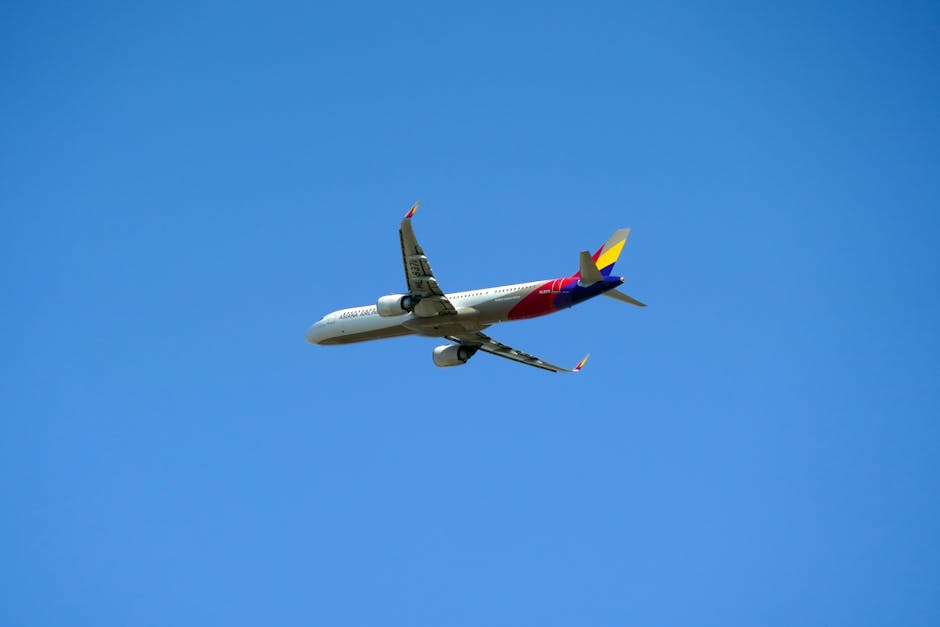
The rise of Low-Cost Carriers has been the single greatest factor in driving down the cost of cheap flights to Korea. However, the sticker price of an LCC ticket can be deceptive. When comparing carriers like Jeju Air, Jin Air, and T’way Air against full-service airlines like Korean Air, one must account for ancillary costs. Most LCCs operating in the region utilize a tiered pricing model where the base fare includes only a small cabin bag. For international travelers carrying checked luggage, these fees can quickly bridge the price gap between a budget airline and a flagship carrier.
| Carrier | Typical Route | Baggage Allowance (Base) | Pros | Cons |
|---|---|---|---|---|
| Jeju Air | Intra-Asia / Domestic | 15kg (Discount Fare) | Extensive network, frequent sales | Strict weight limits, narrow seats |
| Jin Air | Regional / Long-haul | 15kg (Standard) | Owned by Korean Air, better reliability | Higher base price than Jeju Air |
| Air Premia | US / Europe to ICN | 23kg (Economy) | Hybrid model, superior legroom | Limited flight frequency |
| Zipair | US West Coast to ICN | 7kg (Carry-on only) | Full-flat bed options, very low base fare | Everything is an extra fee |
The Air Premia and Zipair Disruption
For long-haul travelers, Air Premia has changed the landscape. Operating as a “hybrid” carrier, they utilize Boeing 787-9 Dreamliners and offer a product that sits between a traditional LCC and a full-service airline. Their fares from Newark (EWR) or Los Angeles (LAX) often underprice Korean Air by $400 or more while still providing a 35-inch seat pitch in economy. This is a significant upgrade from the 30-31 inches found on standard budget carriers.
Similarly, Zipair (a subsidiary of Japan Airlines) offers a highly competitive route from the US West Coast to Seoul via Tokyo. While Zipair is a true LCC—meaning you pay for everything from water to blankets—their base fares are often the lowest in the market for transpacific travel. A “Full-Flat” seat on Zipair can sometimes be purchased for the price of a standard economy seat on a legacy carrier, representing the ultimate “hack” for travelers who prioritize comfort but lack the budget for traditional Business Class.
Managing Ancillary Costs on Regional Flights
If you are flying into Korea from a neighboring country like Japan, Taiwan, or Vietnam, LCCs are almost always the most economical choice. To keep these flights truly cheap, it is advisable to prepay for baggage online. At-the-counter fees for Jeju Air or T’way can be up to 50% higher than the online rate. Furthermore, consider the airport of arrival. While Incheon (ICN) is the primary gateway, Gimpo (GMP) is much closer to central Seoul. Sometimes a slightly more expensive flight to Gimpo is cheaper in the long run when you factor in the reduced cost (approx. $3 vs $10) and time (20 mins vs 60 mins) of the airport transfer via the AREX train or taxi.
Multi-City Routing and Regional Hub Optimization
A common mistake when searching for cheap flights to Korea is looking only at direct flights to Seoul. Because Incheon is one of the busiest hubs in the world, airlines often price direct flights at a premium. A more cost-effective strategy involves “hub-hopping.” By booking a flight to a secondary regional hub like Tokyo (NRT/HND), Taipei (TPE), or Hong Kong (HKG), and then purchasing a separate LCC ticket to Seoul or Busan, travelers can often save $200–$400. This is particularly effective for travelers coming from Europe or the East Coast of the United States.
The Busan (PUS) Alternative
Gimhae International Airport (PUS) in Busan is frequently overlooked by international travelers. However, flights to Busan from regional hubs like Bangkok or Tokyo are often cheaper than flights to Seoul. If your itinerary includes both cities, it is statistically more efficient to fly into one and out of the other (an “open-jaw” ticket). The KTX high-speed train connects Seoul and Busan in approximately 2.5 hours for about $45. If a flight to Busan is $100 cheaper than a flight to Seoul, the train fare is easily absorbed into the savings. This approach also allows you to see more of the country without backtracking to your original arrival point, effectively adding a “free” visit to Korea’s second-largest city.
Pro Tip: When using search engines, always check the “Nearby Airports” box. Including Incheon (ICN), Gimpo (GMP), and even Cheongju (CJJ)—which is a short bus ride from Seoul—can reveal hidden fare discrepancies that standard searches miss. Cheongju, in particular, has become a secondary hub for Aero K, offering rock-bottom prices for those willing to take a 90-minute bus into the capital.
Financial and Connectivity Optimization for the Modern Traveler

The cost of the flight is only the first hurdle; managing your finances and connectivity upon arrival is where many travelers lose their hard-earned savings. To maintain the budget integrity of your trip, it is essential to use financial products that avoid foreign transaction fees. Many standard credit cards charge a 3% fee on every purchase made abroad. Over a two-week trip in Korea, where card usage is nearly universal, this can add up to $100 or more in unnecessary costs. Utilizing a travel-specific card, such as those offered by finance partners on the Awin network like the Barclays View Mastercard or specialized accounts from HSBC, can eliminate these fees entirely.
Financial Product Recommendation:
- Product: Barclays Travel Rewards Card (or similar)
- Pros: Zero foreign transaction fees, points on travel spend, robust fraud protection.
- Cons: Requires a high credit score for approval.
- Cost: Often $0 annual fee for mid-tier cards.
Telecom Savings: eSIM vs. Roaming
Staying connected in Korea is vital for navigating the complex subway systems and using translation apps like Naver Map. Relying on your home carrier’s international roaming plan is usually the most expensive option, often costing $10 per day. Instead, look for telecom solutions from major providers. Many telecom partners available through retail and affiliate networks, such as Airalo or Holafly, offer competitive eSIM packages specifically for South Korea.
Telecom Product Recommendation:
- Product: Airalo LG U+ 10GB eSIM
- Price: Approximately $27.00 for 30 days.
- Specs: 4G/5G data speeds, instant digital delivery.
- Pros: No physical SIM swap needed, significantly cheaper than $10/day roaming.
- Cons: Data-only (no local phone number for restaurant reservations).
Retail Preparations and Gear
Finally, preparing for your trip with the right gear can prevent expensive “emergency” purchases at the airport. Investing in high-quality, lightweight luggage that meets the strict requirements of Korean LCCs is a prudent move. Retailers like those found via Awin’s retail partners, including Samsonite and Target, often have sales on durable hardside spinners.
Retail Product Recommendation:
- Product: Samsonite Freeform Hardside Spinner (21″)
- Price: $150.00 – $190.00.
- Specs: 6.5 lbs, 21 x 15 x 10 inches.
- Pros: Extremely lightweight (crucial for 15kg LCC limits), 10-year warranty.
- Cons: Hardshell can scratch over time.
Common Pitfalls: Booking Mistakes to Avoid
Even with a cheap ticket, certain mistakes can inflate your costs. One common error is failing to verify the K-ETA (Korea Electronic Travel Authorization) requirements. While some nationalities have temporary waivers through 2024, many still require this $10 authorization. Arriving at the airport without it can lead to denied boarding, forcing a last-minute rebooking at peak prices. Additionally, always ensure the name on your ticket matches your passport exactly; Korean carriers are notoriously strict about name corrections, often charging the full price of a new ticket for a simple typo.
Another mistake is ignoring the “Ghosting” phenomenon on flight aggregators. Occasionally, a price will appear on a search engine that is no longer available when you click through to the airline’s site. To combat this, always verify the price on the airline’s official website before finalizing your travel plans. If the price is significantly higher on the official site, the aggregator may be displaying a cached result that is no longer valid.
Summary of Booking Strategy
- Target Window: 120-130 days for peak season; 21-35 days for regional travel.
- Preferred Days: Depart and return on Tuesday or Wednesday to save 12-15%.
- Carrier Choice: Use Air Premia for long-haul value; Jeju Air or Jin Air for regional hops.
- Routing: Consider an open-jaw ticket (In: ICN / Out: PUS) to save on domestic transit and airfare.
- Financials: Use a no-foreign-fee card and prepay for an eSIM to avoid $10/day roaming charges.
- Gear: Use lightweight 21-inch spinners to stay within the strict 15kg LCC weight limits.
By applying these data-driven methods, the goal of finding cheap flights to Korea becomes a matter of logic rather than luck. The market is currently in a state of flux, with new carriers and routes being added regularly. Consistent monitoring and a willingness to be flexible with your arrival city are the most powerful tools in a traveler’s arsenal for 2024 and beyond.