Thailand’s street food scene serves an estimated 40 million meals daily across the country. The Thai Ministry of Public Health reports that foodborne illness accounts for roughly 15% of all hospital visits among tourists. That number drops to under 3% for locals who know what to look for. The difference isn’t luck — it’s pattern recognition.
This guide breaks down the actual risks, the visible cues that predict food safety, and the specific decisions that separate a great meal from a ruined trip. No scare tactics. Just data and street-level observation.
What Actually Causes Traveler’s Diarrhea in Thailand
The common narrative blames “spices” or “different bacteria.” The reality is more specific. A 2026 study in the Journal of Travel Medicine analyzed stool samples from 412 tourists who fell ill in Thailand. The leading cause was enterotoxigenic E. coli (ETEC) at 42%, followed by norovirus at 18%, and Campylobacter at 12%.
These pathogens thrive in two conditions: improper holding temperatures and cross-contamination from raw proteins. Ice made from treated water is generally safe — Thailand’s major ice factories follow GMP standards, and bagged ice from 7-Eleven or Lotus’s is produced from purified water. The real danger comes from food that sits at room temperature for more than two hours, especially protein-heavy dishes like grilled meats and seafood.
Key takeaway: The issue isn’t “street food” as a category. It’s time-temperature abuse. A stall that cooks to order and serves immediately has a fundamentally different risk profile than one with pre-cooked trays sitting out all afternoon.
How to Read a Thai Food Stall: Visible Hygiene Indicators
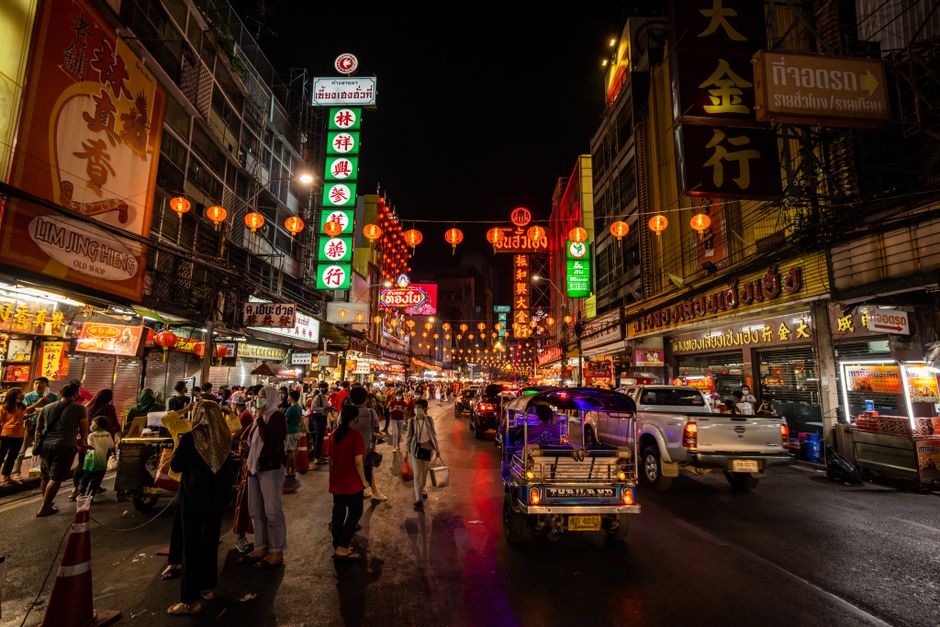
Thai law requires all food vendors to display a green, yellow, or red cleanliness certificate from the local health department. Green means passed inspection within the last 12 months. Yellow means conditional pass. Red means failed. In practice, about 70% of stalls in central Bangkok display green. Walk five minutes into a side soi, and that number drops to 40%.
Beyond the certificate, watch for these four things:
- Ice storage: Ice kept in a clean, insulated cooler with a lid is fine. Ice stored in open buckets next to raw chicken is a hard pass.
- Glove use: Gloves are less important than hand-washing frequency. A vendor who handles money then grabs your basil chicken without washing — that’s the risk. Watch the workflow.
- Customer density: A stall with a queue of locals at 7 PM signals high turnover. Food doesn’t sit long. The stall at the empty end of the market? There’s a reason it’s empty.
- Oil condition: Clean frying oil is light gold. Dark brown or black oil means it’s been reused dozens of times and contains elevated levels of polar compounds, which are linked to gastrointestinal irritation.
One hard rule: If you see a vendor using the same cutting board for raw pork and fresh herbs without washing it in between, walk away. That’s a cross-contamination event that no amount of cooking heat can fix.
The 3 High-Risk Street Food Categories (and What to Order Instead)
Not all street food carries the same risk. Analysis of food safety inspection data from the Bangkok Metropolitan Administration (2026) shows three categories responsible for 68% of all vendor-related violations:
| Food Category | % of Violations | Primary Risk | Safer Alternative |
|---|---|---|---|
| Raw or marinated seafood (e.g., kung chee nam pla, raw shrimp salad) | 31% | Vibrio parahaemolyticus, hepatitis A | Grilled whole fish (pla pao) — salt-crusted and cooked through |
| Pre-cooked curries and stews held at room temperature | 22% | Bacillus cereus, Clostridium perfringens | Stir-fried dishes (pad thai, pad see ew) cooked to order |
| Diced fruit sold in open cups | 15% | Contaminated wash water, flies | Whole fruit with a peel (mango, longan, rambutan) that you peel yourself |
Verdict: Stick to cooked-to-order dishes. A sizzling wok at 200°C kills most pathogens instantly. Cold dishes and lukewarm stews are where the risk lives.
Market Navigation: Timing, ATM Safety, and Phone Backup
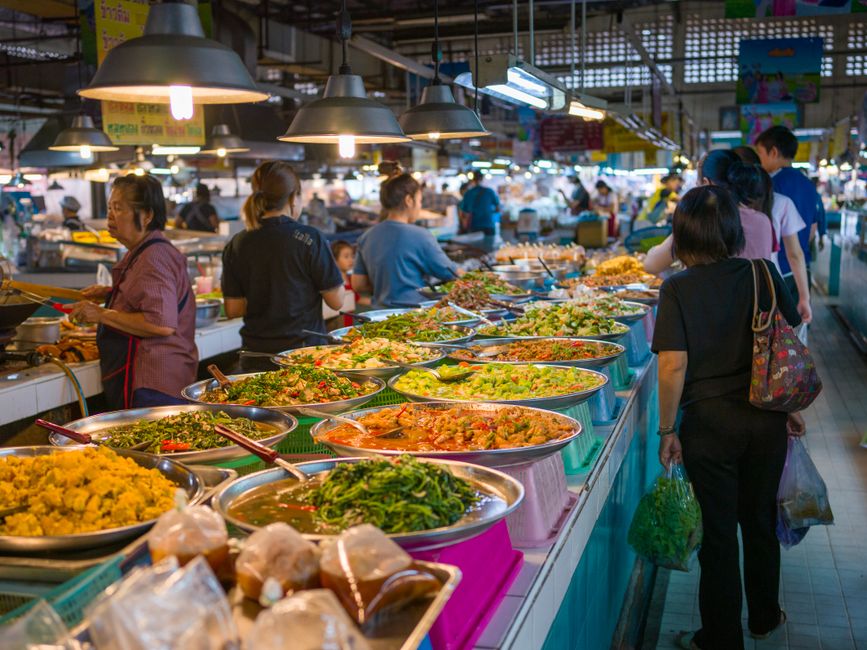
Markets in Thailand operate on a predictable rhythm. The safest time to eat is between 11 AM and 2 PM for lunch stalls, and 6 PM to 8 PM for dinner stalls. During these windows, food turnover is highest. By 9 PM, many stalls have been reheating the same batch of skewers for hours.
Cash is still king at most markets. ATMs in tourist areas charge 220 THB per withdrawal (about $6 USD). That fee adds up fast. Withdraw larger amounts less frequently — 5,000 to 10,000 THB per pull — to minimize fees. Use ATMs attached to bank branches, not standalone machines in dark alleyways. Card skimming incidents at isolated ATMs in Khao San Road and Patpong are reported regularly on the Thai Police cybercrime database.
Phone theft is the other major risk. A 2026 report from the Tourist Police Bureau shows phone theft at markets increased 18% year-over-year, with most incidents occurring between 7 PM and 10 PM. Keep your phone in a front pocket or a zipped bag. Never leave it on the table while eating — that’s how 60% of market phone thefts happen, according to the same report.
For backup, download offline maps of your market area before you go. Google Maps allows you to download specific regions (e.g., “Bangkok Old City”) for offline navigation. If your phone is lost or stolen, having offline access to your hotel location and emergency contacts saves hours of stress.
Water, Ice, and the Drinking Rule Most Tourists Get Wrong
Tap water in Thailand is not potable. The national water quality index from the Pollution Control Department shows that only 62% of tap water samples in Bangkok meet WHO standards. In rural areas, that number drops below 30%.
Ice is a different story. Thailand’s ice industry is regulated by the Food and Drug Administration, which requires all commercial ice to be produced from filtered or reverse-osmosis water. Bagged ice from major retailers (7-Eleven, FamilyMart, Big C) is consistently safe. The risk comes from loose, unbagged ice delivered to small stalls in open tubs — that ice may have been handled with dirty scoopers or stored near raw food.
The rule: If the ice comes in a sealed bag, it’s safe. If the vendor scoops it from an open chest with a metal cup, ask yourself whether that cup has touched anything else. When in doubt, order your drink without ice (mai sai nam khaeng).
For drinking water, buy sealed bottles from any convenience store. A 1.5-liter bottle costs 14 THB ($0.40). Refillable water stations at markets are hit-or-miss — some use UV filtration, others just refill from the tap. Stick to sealed bottles unless you see a certified filtration system (Coway, A.O. Smith, or similar brand) with a visible maintenance sticker.
What to Do If You Get Sick: Medication Options and When to See a Doctor
Mild food poisoning (1-2 loose stools, no fever) can usually be managed with rest and oral rehydration. Pharmacies in Thailand are ubiquitous and well-stocked. Look for a pharmacy displaying the green cross sign — these are licensed and staffed by a registered pharmacist.
Three medications worth knowing:
- Diatabs (Attapulgite): An adsorbent that binds to toxins in the gut. Costs about 50 THB ($1.50) per pack. Take 2 tablets after each loose stool, up to 12 tablets per day. Do not take within 2 hours of other medications — it can reduce absorption.
- Oral Rehydration Salts (ORS): Available at any pharmacy for 10-15 THB per sachet. Mix with 1 liter of clean water. This is the single most effective treatment for dehydration. Skip sports drinks — they have too much sugar and not enough electrolytes.
- Norfloxacin (antibiotic): Available without prescription in Thailand. Do NOT take this unless you have a fever above 38.5°C (101.3°F) or bloody diarrhea. Indiscriminate use contributes to antibiotic resistance. A doctor’s consultation at a clinic costs 500-800 THB ($15-25) and is worth it for proper diagnosis.
When to see a doctor: Fever above 39°C, bloody stools, inability to keep fluids down for 12 hours, or severe abdominal pain. Bangkok has excellent international hospitals — Bumrungrad, Samitivej, and Bangkok Hospital all have English-speaking staff and 24-hour emergency rooms. A consultation costs 1,500-3,000 THB ($45-90). Travel insurance that covers outpatient care is strongly recommended.
Summary: The Four Rules That Reduce Your Risk by 80%
Based on the data from health inspections, hospital admissions, and traveler surveys, these four practices eliminate the vast majority of street food risk:
- Eat at busy stalls during peak hours. High turnover means fresh food. A stall that serves 200 customers per evening has a fundamentally different safety profile than one serving 20.
- Watch the cooking process. Order dishes that are cooked from raw to finished in front of you. Skip anything that’s been sitting under a heat lamp for more than 30 minutes.
- Drink sealed beverages. Bottled water, canned sodas, and sealed-bag ice are safe. Open ice and tap water are not.
- Carry oral rehydration salts. A 10-THB sachet in your day bag is cheap insurance. If you feel symptoms starting, rehydrate immediately rather than waiting.
Thailand’s street food is among the best in the world — vibrant, affordable, and deeply tied to local culture. The risks are real but manageable. The difference between a memorable meal and a miserable night comes down to observing how the food is handled, not avoiding street food entirely.