You booked the flight. You have a 40-liter pack. You’re ready for temples, beaches, and $1 pad thai. But within the first week, something goes sideways — you run out of cash, you lose your phone, or you book a tour that costs triple the local price. These five mistakes are predictable. Avoid them, and your trip stays cheap and smooth.
1. Overpacking for the Climate
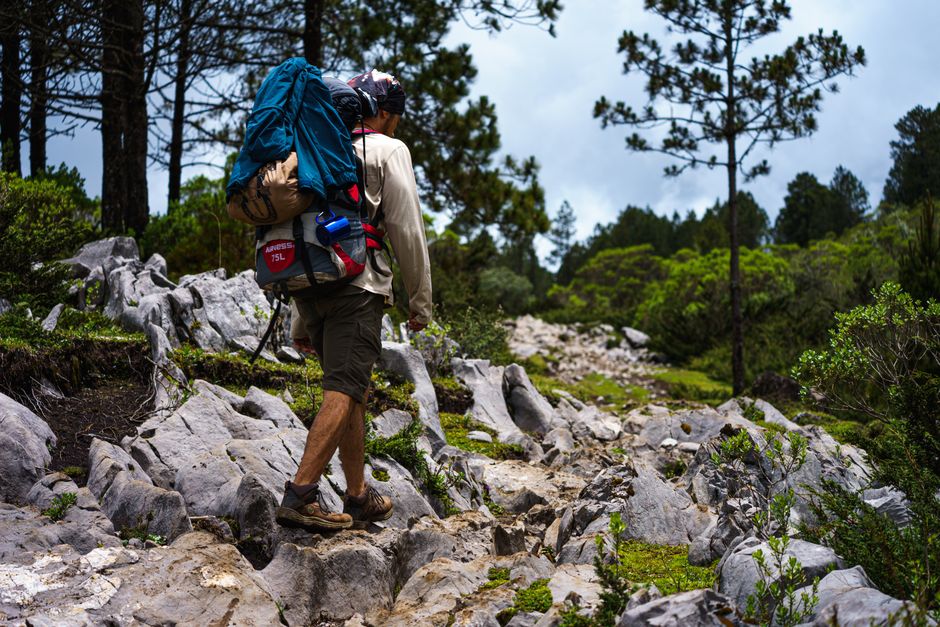
First-time solo backpackers treat Southeast Asia like a multi-season expedition. They bring jeans, a fleece, three pairs of shoes, and a “just in case” sweater. The result? A 15kg bag you lug through humid bus stations and up hostel stairs. You wear maybe 30% of it.
What you actually need
Stick to 5-7 quick-dry items: 3 tank tops or tees, 2 pairs of shorts, 1 pair of lightweight pants (for temples), flip-flops, and one pair of walking shoes. Laundry costs $1-2 per kilo in most towns. You can wash clothes every 3-4 days. Leave the jeans at home — they take 24 hours to dry in humidity and weigh a ton wet.
The packing mistake that costs you money
Every extra kilo on a budget airline costs $8-15 per leg. If you fly 4 times across the region, that’s $60+ wasted on clothes you don’t need. Packing light saves cash and back pain. Buy a cheap sarong at a local market ($3) — it works as a towel, blanket, and temple cover-up.
2. Booking Everything Before You Arrive

It feels safe to lock in hostels and buses from home. But it’s also how you overpay. Southeast Asia runs on walk-in rates and last-minute deals. Booking 3 months ahead on a booking site often costs 30-50% more than showing up at the same guesthouse.
Walk-in vs. online: the real numbers
In Chiang Mai, a private room booked online for 3 nights costs $25/night. Walk in at 10am, ask the owner directly, and you get the same room for $15. In Hanoi, the difference is smaller but still real: $18 online vs. $14 cash. The exception is peak season (Christmas, Songkran) when rooms fill up. For normal weeks, arrive and negotiate.
When booking ahead makes sense
Only pre-book the first 2 nights in your arrival city. You’ll be jet-lagged and don’t want to search for a bed at midnight. After that, keep it flexible. Bus tickets can be bought 1 day before. Trains in Thailand and Vietnam rarely sell out unless it’s a holiday.
3. Ignoring Local SIM and eSIM Options
Roaming from your home carrier is a mistake that costs $10-20 per day for basic data. In Thailand, AIS and TrueMove sell tourist SIMs at the airport for $8-12 with 15GB of data valid for 8 days. In Vietnam, Viettel offers a 30-day plan with 30GB for $6. That’s a fraction of what roaming charges.
Physical SIM vs. eSIM
If your phone supports eSIM (iPhone XR and newer, most Samsung flagships after 2026), you can activate an eSIM before you leave. Providers like Airalo and Holafly sell regional plans: $19 for 5GB across 10 countries valid 30 days. No swapping physical cards, no hunting for a store. For longer stays, a physical local SIM is cheaper — $12 for unlimited data in Thailand for 30 days.
The offline map backup
Download Google Maps offline for every city you visit. SIMs sometimes fail in rural areas. Offline maps don’t eat data. Do it before you leave the hotel WiFi.
4. Carrying Too Much Cash or None at All
Two extremes hurt solo backpackers. First: carrying $500+ in cash. Lost or stolen, and you’re stuck. Second: relying entirely on cards. Many guesthouses, street stalls, and local buses in Laos, Cambodia, and rural Thailand are cash-only. You need a middle ground.
The cash-card balance that works
Carry $100-150 in local currency at any time. Keep another $100 emergency stash in USD (widely accepted across the region). Use ATMs for withdrawals — but avoid the ones in 7-Eleven or tourist areas that charge $5-7 per transaction. Use bank ATMs (Bangkok Bank, Vietcombank) which charge $3-4. Withdraw larger amounts less often to minimize fees.
ATM fee math
If you withdraw $50 and pay a $4 fee, that’s 8% lost. Withdraw $200 and pay $4, that’s only 2%. Use a fee-free travel card like Charles Schwab (US) or Revolut (EU) that reimburses ATM fees. Without one, plan withdrawals of $150-200 each time.
5. Falling for the “Too Good to Be True” Tour
You see a poster: “Ha Long Bay 2-Day Cruise — $25!” The price is half of what everyone else charges. You book it. The bus is a minivan with no AC. The “cruise” is a wooden boat with 40 other people. The food is rice and watery soup. The “cave visit” is 15 minutes. You spend the second day waiting for a bus that arrives 3 hours late.
How to spot a bad tour
Compare prices across 3-4 agencies. If one is 40% cheaper than the rest, there’s a catch. Ask for the exact itinerary in writing — times, meal details, number of people. Check recent Google Maps reviews, not just TripAdvisor. A tour with 4.8 stars and 12 reviews is often fake. Look for 300+ reviews with consistent complaints about the same issue (late pickups, bad food).
The better approach
Book tours 1-2 days in advance through your hostel or a reputable local agency. In Vietnam, Sinh Tourist and Sinh Cafe are reliable for Mekong Delta and Ha Long Bay. In Thailand, Mama Travel & Tour in Khao San Road is overpriced — skip it. Ask other backpackers in your dorm what they booked and liked. Word of mouth beats any brochure.
6. Not Having a Backup for Lost or Stolen Items
A lost phone in Southeast Asia is not just an inconvenience — it’s a security risk. You lose your maps, your booking confirmations, your photos, and your two-factor authentication for banking. First-time backpackers assume it won’t happen to them. It does. Every hostel has a story of someone’s phone grabbed from a scooter or left in a taxi.
The cheap insurance: cloud backups
Before you leave, turn on Google Photos auto-backup. Enable WhatsApp chat backup to Google Drive. Take a photo of your passport, visa, and all credit cards. Email that photo to yourself. If your phone disappears, you can access everything from a $100 Android phone at a local shop within an hour.
Physical backups matter too
Carry a small waterproof pouch ($5 at Decathlon) with a photocopy of your passport and one credit card. Keep it separate from your main wallet. In the worst case — pickpocketed or robbed — you still have ID and a way to get cash.
7. Underestimating the Cost of Getting Between Countries
First-timers budget $20-30 per day for food and accommodation, then blow their budget on a single flight from Bangkok to Bali that costs $120. They forget that Southeast Asia is not one contiguous bus route. Getting from Thailand to Vietnam involves a flight ($40-80) or a 30-hour bus. Getting from Vietnam to Cambodia by land is cheap ($10-15 for the bus), but takes a full day.
Real transport costs for 2026
Here’s what you’ll actually pay for common routes:
| Route | Bus/Train | Flight | Time |
|---|---|---|---|
| Bangkok to Chiang Mai | $12-18 | $30-50 | Bus 10h, Flight 1h |
| Bangkok to Ho Chi Minh City | — | $50-80 | Flight 2h |
| Ho Chi Minh City to Phnom Penh | $12-15 | $40-60 | Bus 6h, Flight 1h |
| Chiang Mai to Luang Prabang | $25-35 | — | Bus + boat 2 days |
| Kuala Lumpur to Penang | $8-12 | $15-25 | Bus 4h, Flight 1h |
How to budget transport correctly
Assume $15-25 per overland border crossing for visas and transport combined. Budget $50-80 per flight between countries. If you’re doing 5 countries in 4 weeks, transport will cost $200-350 total. That’s not a small number. Factor it into your daily budget from day one.