You’ve seen the Instagram shots: sunsets over alpine lakes, a single boot on a ridge, a clean tent pitched on granite. What you haven’t seen is the day 30 panic when your feet look like raw hamburger and you still have 2,350 miles to go.
The Pacific Crest Trail runs from Mexico to Canada through California, Oregon, and Washington. Every year, about 3,000 people start a thru-hike. Roughly 800 finish. The difference isn’t fitness. It’s knowing what actually matters before you step off.
Why Most Beginners Quit in the First 200 Miles
The first two weeks on the PCT are not a vacation. They’re a brutal physical and mental filter. Here’s what kills the dream for most new hikers.
Your Feet Will Bleed (Plan for It)
Your fancy trail runners will feel great at REI. After 20 miles with a 30-pound pack, they’re sandpaper. Blisters, black toenails, and hot spots are not failures — they’re normal. The people who quit are the ones who didn’t prepare for this reality.
Stop at every water break. Take your shoes and socks off. Let your feet air dry for five minutes. Apply leukotape before you feel a hot spot, not after. Carry a small tube of Trail Toes or similar anti-chafe balm. Reapply every morning.
Your Pack Weight Will Make You Miserable
The single biggest mistake beginners make is packing a 40+ pound base weight. You don’t need a camp chair, a full cook kit with a french press, or three pairs of pants. You need shelter, sleep system, water filter, food, and layers.
Aim for a base weight under 15 pounds. That means a Zpacks Duplex tent (20 oz, $700) or a Gossamer Gear The One (22 oz, $350). A Katabatic Flex 22 quilt (23 oz, $470) instead of a mummy bag. A Sawyer Squeeze water filter (3 oz, $40) — not the heavy gravity system. Every ounce matters when you carry it for 1,500 miles.
You Will Be Hungry and Exhausted
Your body burns 5,000-6,000 calories per day on trail. You can only carry about 2-3 days of food at a time. You’ll lose weight. You’ll crave salt, fat, and sugar constantly. The solution is not complicated: pack calorie-dense food. Knorr pasta sides with olive oil. Tortillas with peanut butter. Snickers bars. Instant mashed potatoes with bacon bits.
Mail drops to towns every 5-7 days are the standard approach. Use Guthook Guides (now FarOut, $40 for the PCT app) to see exactly where you can resupply. Don’t rely on memory — the app shows real-time water availability, trail conditions, and town info.
The Permit System Is Not Optional
This is where beginners get caught. You cannot just show up at the southern terminus and start walking. The PCT is managed by the Pacific Crest Trail Association (PCTA), and the permit system is strict.
| Permit Type | When to Apply | Cost | Notes |
|---|---|---|---|
| PCTA Long-Distance Permit | October-January (lottery) | Free | Covers entire trail, limited to 50 per day |
| California Fire Permit | Anytime | Free | Required for campfires and stoves in CA |
| Canada Entry Permit | At least 30 days before | $7 CAD | Must have valid passport |
| National Park Permits | Varies | Included in PCTA permit | Yosemite, Crater Lake, North Cascades |
If you miss the PCTA lottery window, you can apply for individual permits from each national forest and park. It’s a bureaucratic nightmare. Do not attempt this without using the FarOut app or reading the PCTA’s official permit page thoroughly.
The lottery opens in October for the following year. Set a calendar reminder. Spots fill within hours.
Water Is Your Biggest Problem
The PCT is not a green tunnel. Large sections — especially in Southern California — are bone-dry desert. You will carry 4-6 liters of water at a time. That’s 8-12 extra pounds on your back. Water sources can be 20+ miles apart.
Here’s the reality: you cannot rely on the water caches maintained by trail angels. They sometimes run dry. You need to carry enough water to get to the next guaranteed source, plus one liter extra for emergencies.
Use the FarOut app to check recent comments on water sources. A stream shown on a map might be dry. A trail angel cache might be empty. The app shows comments from hikers from the last 24-48 hours. Trust that data, not printed maps from 2019.
Sawyer Squeeze is the gold standard for water filtration. It screws onto standard Smartwater bottles (which are lighter than Nalgene). Filter at every source. Giardia is real. Do not drink untreated water even if it looks clear.
Gear That Actually Matters (and What You Can Skip)
Beginners overthink gear. Here’s the short list of what makes or breaks your hike.
Non-Negotiable Items
- Bear canister: Required in the Sierra Nevada. BearVault BV500 ($80, 41 oz) is the standard. It fits 5-6 days of food. You cannot use a bear bag in the Sierra — rangers check.
- Navigation: FarOut app on your phone ($40) plus paper maps as backup. Halfmile’s PCT Maps are available as PDFs for free. Download them before you leave. Cell service is spotty.
- Headlamp: Nitecore NU25 ($35, 1.3 oz) is the lightest reliable option. You’ll hike in the dark often, especially in summer heat.
- Rain gear: Frogg Toggs Ultra-Lite2 ($20, 5.5 oz) is cheap and works. Don’t spend $300 on Gore-Tex for a trail where you’ll mostly hike in dry conditions.
What to Leave at Home
- Camp shoes (your trail runners are fine for camp)
- Full cook system (cold soaking works for many hikers — no stove, no fuel, no pot)
- Multiple pairs of pants (one pair of hiking shorts, one pair of sleep pants)
- Heavy power bank (a 10,000 mAh Anker is enough for 4-5 days between charges)
- Deodorant (you will smell. Everyone smells. Accept it.)
The Real Cost: Time, Money, and Mental Grit
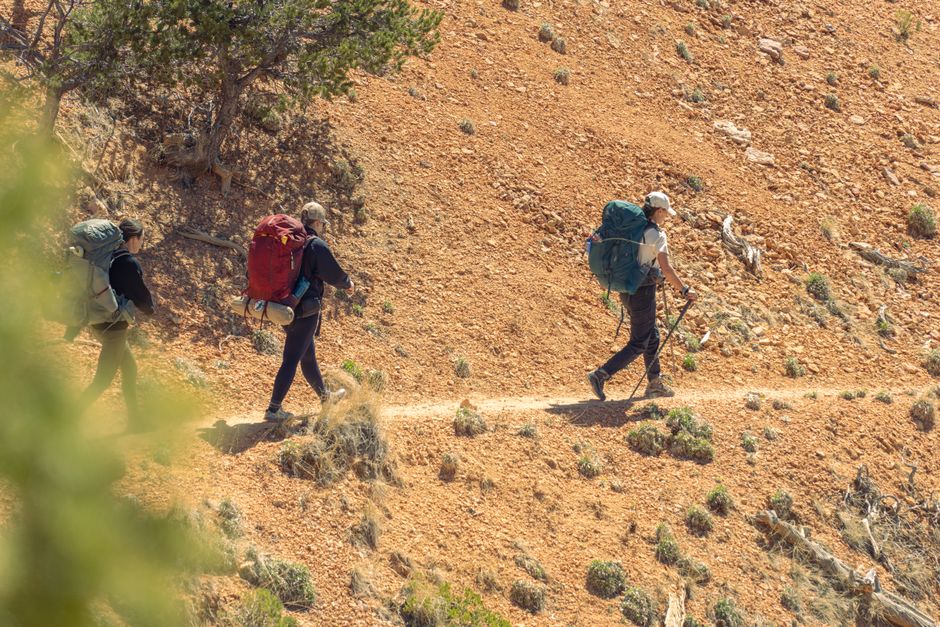
A PCT thru-hike takes 4-6 months. It costs $5,000-$8,000 total, including gear, food, town stays, and transportation. That’s not a weekend trip. It’s a lifestyle decision.
The hardest part is not the mountains. It’s the monotony. Walking 20+ miles every single day for months. Rain that soaks everything. Feet that hurt every morning. Towns that feel like paradise and cost you $100 for a motel room and a burger.
You will want to quit. Most people do. The ones who finish are not the strongest or the fastest. They’re the ones who decided, before they started, that quitting was not an option.
If you’re reading this in 2026 and thinking about a 2027 hike, start training now. Walk 10 miles a day with a loaded pack. Sleep on the ground in your backyard. Eat ramen for a week straight. If that sounds awful, the PCT is not for you. If it sounds like an adventure, you might be ready.