Most people think solo travel anxiety is about being lonely. It’s not. It’s about the moment you land in a foreign country and realize nobody knows you’re there. No backup. No one to split a taxi with if things go wrong. That feeling in your chest — I know it well.
I spent six months convincing myself to book a flight to Tokyo. Then I spent another three months nearly cancelling it. What finally got me on that plane was a single rule I made: I only had to stay for 48 hours. If I hated it, I could come home. I never used that escape hatch.
Why Japan Is the Best Place for First-Time Solo Travelers
Japan is a cheat code for nervous solo travelers. The reason is simple: the infrastructure assumes you’re incompetent and compensates for it.
Train stations have English signs. Every convenience store sells decent food 24/7. Lost property gets returned 90% of the time. The country runs on systems that work even when you don’t.
I remember my first morning in Shinjuku. I’d barely slept, jetlagged and convinced I’d made a terrible mistake. I walked into a 7-Eleven at 6 AM and bought an onigiri, a bottle of green tea, and a pre-packaged egg sandwich. Total cost: ¥480 (about $3.20). I sat on a bench outside Shinjuku Gyoen and ate it. That was the moment my brain switched from “I need to escape” to “I can do this.”
Japan doesn’t require you to be an experienced traveler. It requires you to read signs and follow basic etiquette. That’s it.
How I Built a Solo Itinerary That Didn’t Overwhelm Me
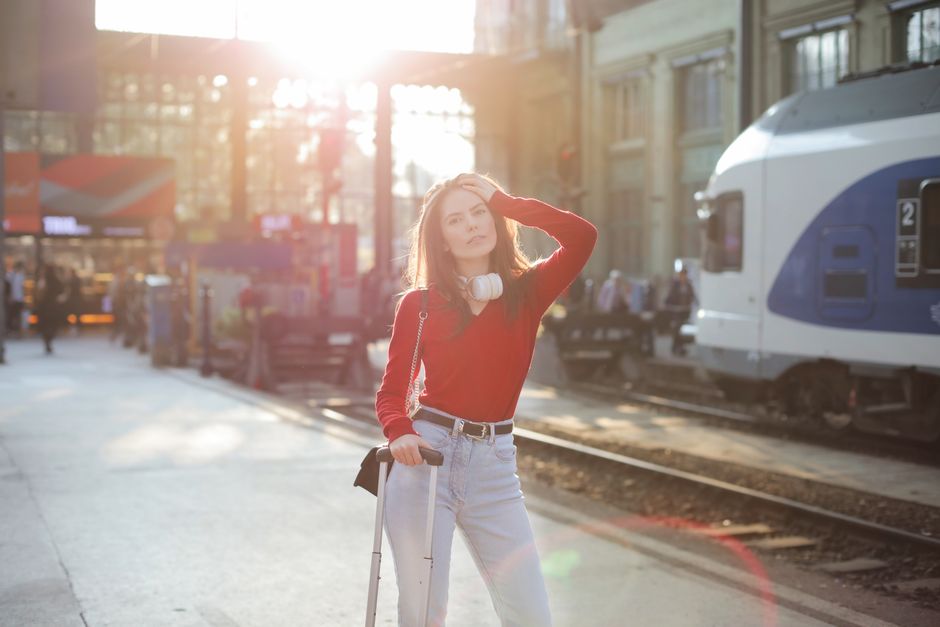
The biggest mistake new solo travelers make is trying to see everything. I did the opposite. I planned one main activity per day and left everything else open.
Here’s what my first week actually looked like:
| Day | Main Activity | Location | Cost (¥) |
|---|---|---|---|
| 1 | Arrive, explore Shinjuku at night | Tokyo | 0 |
| 2 | Tsukiji Outer Market + teamLab Borderless | Tokyo | 3,800 |
| 3 | Shinkansen to Kyoto, walk Philosopher’s Path | Kyoto | 14,000 |
| 4 | Fushimi Inari before 7 AM | Kyoto | 0 |
| 5 | Arashiyama Bamboo Grove + monkey park | Kyoto | 600 |
| 6 | Osaka day trip — Dotonbori food crawl | Osaka | 2,000 |
| 7 | Tokyo — Akihabara + depart | Tokyo | 0 |
Total planned activity cost for the week: roughly ¥20,400 ($135). That’s less than a single night at a mid-range hotel in New York. The rest of my time was spent wandering, eating, and sitting in cafes watching people. That unstructured time was more valuable than any temple visit.
What Actually Helps With Solo Travel Anxiety (Not What You Think)
Everyone tells you to “just be confident” or “push through the fear.” That advice is useless. Here’s what actually worked for me.
Start with 7-Eleven food on day one
I’m serious. The psychological safety of knowing you can get a hot meal at 3 AM for ¥300 is immense. In Japan, 7-Eleven, FamilyMart, and Lawson are everywhere. They have ATMs that accept foreign cards, bathrooms, and free wifi. They’re your safety net. Use them.
Book your first two nights in a hostel with a common room
I used Hostelworld and picked one in Asakusa with a 9+ rating. The common room had free green tea and a view of the Skytree. I met a solo traveler from Brazil on my first night. We didn’t become best friends. But we ate ramen together twice. That contact made the city feel smaller. You don’t need a travel buddy. You just need one conversation every 48 hours.
Carry a Suica card from the airport
You can get these at any JR East ticket machine. Load ¥3,000 on it. It works on trains, buses, and convenience stores. Not having to fumble with cash or ticket machines removes a huge layer of stress. I still have mine. It still works.
Three Things That Almost Made Me Go Home (And How I Handled Them)
Things went wrong. That’s the point. Here’s what happened and what I’d do differently.
Getting lost in Shinjuku Station
Shinjuku Station has 200+ exits. I spent 45 minutes underground trying to find the right one. My phone died at 15%. Panic started rising. Then I found a JR staff member who didn’t speak English but understood my map gesture. She walked me to the exit. Lesson: carry a portable charger. I now use an Anker 10,000mAh (about $25). It charges my phone three times. Worth every gram.
Booking a capsule hotel that felt like a coffin
I booked a cheap capsule hotel in Shinjuku for one night to save money. The capsule was 100cm high. I’m 178cm. I couldn’t sit up. The guy next to me snored like a chainsaw. I checked out at 6 AM and booked a proper hostel. Don’t cheap out on sleep when you’re solo. Bad sleep makes anxiety worse. Spend the extra ¥2,000 for a private pod or a real room.
Feeling invisible at a busy restaurant
My third night in Tokyo, I walked into a tiny ramen shop. Every seat was full. The chef pointed at the door. I left and ate convenience store food in my hostel. It stung. The next day I found a restaurant with a vending machine ordering system — you buy a ticket, hand it to the staff, sit down. No interaction required. Look for ticket-system restaurants when you’re not feeling social. They’re everywhere in Japan.
When Solo Travel Anxiety Actually Faded (The Exact Moment)
It wasn’t dramatic. There was no sunrise epiphany. It happened on day four in Kyoto, sitting on a wooden bench at Fushimi Inari at 6:30 AM. The sun was coming up through the torii gates. I was the only person there. No phone. No plan for the next three hours. I just sat and watched the light change.
And then I realized: I wasn’t scared anymore. I’d navigated trains, ordered food without a shared language, handled a lost phone moment, and survived a capsule hotel disaster. Every small failure had built a small piece of confidence. The anxiety didn’t disappear. It just stopped being the loudest voice in my head.
What I Wish Someone Had Told Me Before I Left
Three pieces of advice that would have saved me weeks of stress.
- Download Google Maps offline for your entire region before you leave. Not just the city. The whole region. It works without data. It saved me twice.
- Bring a small notebook and pen. I wrote down one thing I liked each day. “The old man who bowed at me on the train.” “The way the vending machine lights look at night.” That habit rewired my brain to look for good things instead of threats.
- Book a guided food tour on day two. I did a three-hour walking tour in Kyoto for ¥5,000. The guide took me to places I never would have found. I learned how to order, what to tip (nothing — tipping is not a thing in Japan), and how to use the ticket machines. That tour paid for itself in confidence alone.
I used a local tour company called Magical Trip. They run small-group tours. It was me and three other solo travelers. We didn’t exchange numbers afterward. But for three hours, I wasn’t eating alone. That mattered.
What I’d Change If I Did It Again
I’d stay longer in fewer places. Seven days, two cities was too much movement. Next time: ten days, one city, no train to catch every third morning. I’d also skip the capsule hotel entirely and just pay for a decent guesthouse. The ¥3,000 I saved cost me a full night of sleep and a lot of unnecessary stress.
I’d also bring a smaller backpack. I packed for every possible scenario. I used maybe 40% of what I brought. You don’t need three pairs of shoes for a week in Japan. One pair of comfortable walking shoes and one pair of sandals is enough. The rest is just weight you carry yourself.
I went home and immediately booked my next solo trip. That’s what Japan did for me. It didn’t cure my anxiety. It showed me that anxiety and adventure can exist in the same body at the same time. One doesn’t cancel the other out.