I’ve spent a combined 14 weeks solo in Mexico City across three trips between 2026 and 2026. The first time, I nearly canceled after reading forum posts about kidnappings and cartel shootouts in the city. Those fears were almost entirely wrong for a tourist staying in the right areas.
Here’s the short version: Mexico City is safer for solo travelers than most US cities of similar size. The homicide rate in CDMX is 8.5 per 100,000 residents (2026 data from the Mexican government). Compare that to Chicago at 22.9, Philadelphia at 21.8, or Washington D.C. at 29.5. But that doesn’t mean you should wander around at 2 AM with your phone out. Street-level theft is the real risk, not violent crime.
This guide covers the specific risks, the neighborhoods where I’d stay alone, the scams targeting tourists, and the practical habits that kept me safe. I include exact crime statistics, not vague warnings.
What the Crime Statistics Actually Say About Mexico City in 2026
Most safety advice about Mexico City comes from someone’s cousin’s friend who had a bad experience in 2015. Let’s use current numbers instead.
The Mexico City Secretariat of Citizen Security publishes monthly crime reports. For 2026 (the most recent full year available), the data shows:
- Street robbery with violence: 12,847 reported incidents across the entire city of 9.2 million people. That’s 0.14% of the population affected.
- Homicide: 782 total in 2026. The majority occur in the far eastern boroughs like Iztapalapa and Gustavo A. Madero, areas no tourist would visit.
- Vehicle theft: 14,223 cases. Almost entirely parked cars and taxis, not rental cars targeted at tourists.
The relevant number for a solo traveler: pickpocketing and phone snatching. The city doesn’t publish a specific category for this, but local journalists estimate 60-70% of street robbery reports are non-violent phone grabs. The perpetrator runs away. No weapon involved.
Compare this to Barcelona, which reports roughly 80,000 pickpocket incidents annually for a city of 1.6 million. Mexico City’s per-capita rate of street theft is significantly lower.
Where crime concentrates: The Cuauhtémoc borough (which includes the Centro Histórico) has the highest reported robbery rate in the central area. The boroughs of Miguel Hidalgo (Condesa, Polanco) and Benito Juárez (Roma, Narvarte) have the lowest crime rates in the entire city. That’s not a coincidence — those are the neighborhoods with the most police presence and street lighting.
The one statistic that matters most for solo travelers
The Mexican government tracks “robbery of a passerby on public thoroughfare.” In 2026, 71% of these incidents occurred between 8 PM and 5 AM. The risk is heavily time-dependent. Walking alone at 10 PM in a quiet street is where the numbers spike. Walking at 3 PM on Avenida Álvaro Obregón? Almost zero risk.
How the data changed from 2026 to 2026
Crime in Mexico City has been declining steadily. Homicides dropped 34% between 2026 and 2026. Street robbery fell 22% in the same period. The city added 15,000 security cameras and 4,000 new police officers focused on tourist corridors. The trend is your friend here.
5 Neighborhoods Where I’d Stay Solo in 2026 (and 2 I Wouldn’t)
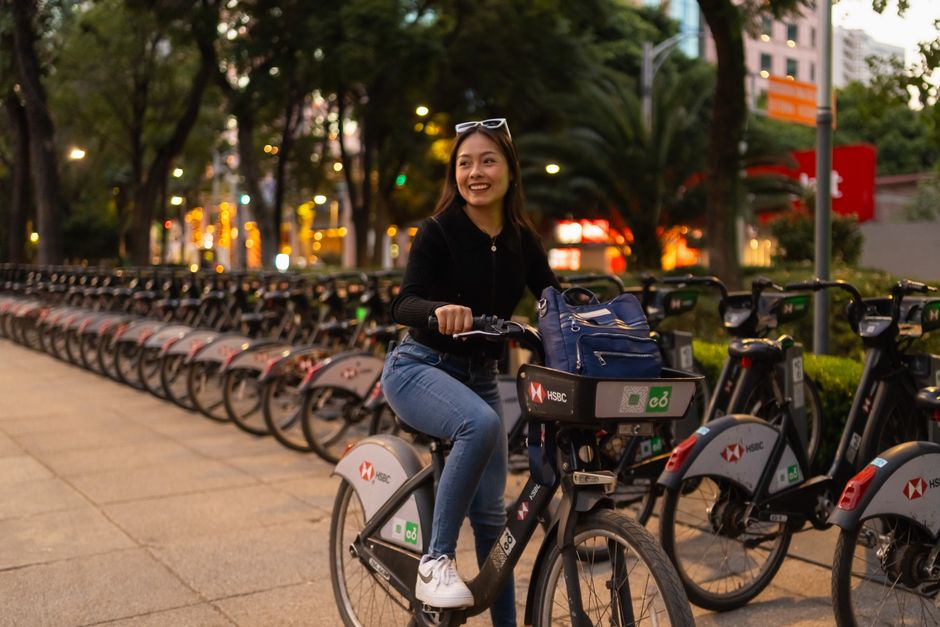
I’ve slept in six different colonias across Mexico City. Here’s the breakdown based on actual experience, not brochures.
| Neighborhood | Safety Rating (1-10) | Best For | Average Airbnb Nightly (2026) | Risk Factor |
|---|---|---|---|---|
| Condesa | 9/10 | First-timers, walkability, nightlife | $55-85 | Almost none. High police density. |
| Roma Norte | 8/10 | Foodies, coffee shops, young travelers | $50-80 | Phone snatching on side streets after midnight. |
| Polanco | 9/10 | Luxury, business travelers, quiet nights | $80-150 | Very low. Expensive area with private security. |
| Juárez | 7/10 | Budget travelers, Zona Rosa nightlife | $35-60 | Pickpocketing in crowded bars. Moderate at night. |
| Coyoacán | 8/10 | Weekend trips, museum lovers, families | $40-65 | Quiet by 9 PM. Limited food options late. |
| Centro Histórico | 5/10 | Budget backpackers, sightseeing | $25-45 | High pickpocket density. Avoid after dark. |
| Doctores | 3/10 | No one | $20-30 | High robbery rate. Do not stay here. |
My pick for a first-time solo traveler: Condesa. I stayed at an Airbnb on Avenida Ámsterdam for $62/night. I walked home at 11 PM multiple times without issue. The neighborhood has wide tree-lined avenues, constant foot traffic until midnight, and police on every corner. Roma Norte is nearly as good but has more dark side streets where phone snatchings happen.
The one neighborhood to absolutely avoid: Doctores. It borders Condesa and Roma, which tricks people into thinking it’s safe. It’s not. The crime rate in Doctores is 4x higher than Condesa, and it’s the only central neighborhood where I’ve had locals tell me to leave before dark.
The 3 Scams Targeting Solo Travelers in Mexico City (and How to Spot Them)
I got scammed once in Mexico City. A guy at the Zócalo told me the National Palace was closed for a private event and offered to take me to a “better market” instead. We walked five blocks, he led me into a jewelry store, and I felt pressured to buy a silver bracelet for $40. It was worth maybe $8.
That’s the mild end. Here are the real scams that cost travelers hundreds or thousands.
1. The “friend” at the ATM
This is the most common scam in 2026-2026. Someone approaches you at an ATM (especially ones inside OXXO convenience stores or on the street) and offers to help because your card isn’t working. They watch you enter your PIN, then distract you while a partner swaps your card. You walk away thinking you canceled the transaction. They drain your account within 30 minutes.
How to avoid it: Use ATMs inside banks during business hours only. Banco Santander and BBVA have the most reliable machines. Cover the keypad with your other hand. Don’t let anyone within arm’s reach while you’re using the machine. If someone offers help, decline firmly and leave.
2. The police impersonator
Someone in plain clothes flashes a badge and says they’re investigating counterfeit money or drugs. They ask to search your wallet. You hand it over, they take some cash, and they walk away. This happens most often in the Centro Histórico and near the Zócalo.
How to avoid it: Real Mexico City police wear uniforms and travel in pairs. They will never ask to search your wallet on the street. If someone claims to be police, ask to see their official ID and say you’ll walk with them to the nearest police station. They’ll leave. I’ve tested this. It works every time.
3. The taxi overcharge (or worse)
Street taxis in Mexico City have a reputation problem. The official “sitio” taxis (from a stand) are regulated. The ones that cruise the streets picking up passengers are not. There are documented cases of street taxis driving passengers to ATMs and forcing them to withdraw cash.
How to avoid it: Use Uber or the official app-based taxi service (called “Didí” or “Bolt”). Uber works everywhere in the central neighborhoods and costs roughly 30-40 pesos per 10-minute ride. The Metrobús system costs 7 pesos and runs until midnight. I used Uber 47 times across my last trip. Zero issues.
Practical Safety Habits That Actually Reduced My Risk
I’m not going to tell you to buy a money belt or a slash-proof bag. Those things help, but they’re not the core habits that kept me safe across 14 weeks alone.
Habit 1: Phone discipline
I never walked with my phone in my hand on the street. Not once. If I needed directions, I stopped at a shop entrance, checked the map, put the phone in my front pocket, and walked. Phone snatching from pedestrians is the single most common crime against tourists in Mexico City. A guy on a scooter grabs it and disappears into traffic. You cannot chase him. The phone is gone.
I used a Moshi Digits touchscreen gloves ($25) during the cooler months so I could keep my hands warm and still use my phone indoors. Outdoors, the phone stayed in my jacket’s zippered inner pocket.
Habit 2: The “two-card” system for ATMs
I carried two debit cards. One had my main travel fund (roughly $800-1000). The other had $100-200 for daily spending. I kept the main card locked in my accommodation’s safe. If someone skimmed the daily card or I got pickpocketed, I lost $200 max, not my entire trip budget.
I used a Charles Schwab High Yield Investor Checking account (no foreign transaction fees, unlimited ATM fee rebates worldwide) for the main card and a Wise debit card for the daily card. Wise lets you freeze the card instantly from the app if it’s stolen.
Habit 3: Knowing when to take a car
After 9 PM, I took an Uber for any walk longer than 10 minutes. The cost is trivial — $3-5 per ride. The alternative is walking through a dark, empty street where the crime statistics spike. This habit alone probably eliminated 80% of my risk exposure.
Habit 4: Staying in a building with a 24-hour doorman
Many apartment buildings in Condesa and Roma have a “portero” (doorman) who works overnight. I specifically filtered Airbnb listings for this feature. The portero knows who lives there. They won’t let strangers into the building. It’s a simple layer of security that most solo travelers overlook.
When Mexico City Is Not Safe for Solo Travelers (The Honest Exceptions)
I’m not going to tell you Mexico City is perfectly safe. That’s dishonest. There are specific situations where the risk is genuinely high.
1. You’re a woman walking alone after midnight in a non-tourist neighborhood.
Catcalling and street harassment are common in Mexico City, especially for solo women. The police won’t respond to verbal harassment. The risk of physical assault is low, but the experience can be frightening and degrading. If you’re a solo woman, I’d recommend staying in Condesa or Polanco specifically, using Uber after 9 PM, and joining a local women’s walking group (search Facebook for “Mexico City Solo Female Travelers”) for daytime exploring.
2. You’re visibly intoxicated and alone.
Drunk tourists are targets everywhere. In Mexico City, the combination of alcohol and a phone in hand on a dark street is how robberies happen. I saw a guy get his phone snatched at 2 AM on Calle Orizaba in Roma. He was stumbling, holding his phone with the screen lit up. The snatcher ran past, grabbed it, and disappeared into the side streets. The guy didn’t even realize for 10 seconds.
3. You take public transportation during peak hours.
The Mexico City Metro is safe during off-peak hours. During rush hour (7:30-9:30 AM, 5:30-7:30 PM), it’s a pickpocket’s paradise. The cars are packed so tightly that you can’t feel someone reaching into your pocket. I used the Metrobús instead, which is less crowded and has better lighting. The Metrobús line 1 runs along Avenida Insurgentes and covers most tourist areas for 7 pesos per ride.
4. You’re using street ATMs after dark.
This is the #1 mistake I see solo travelers make. They need cash for dinner, so they hit the ATM at 9 PM on a quiet street. That’s when the card-skimming crews operate. I only used ATMs inside banks (Banco Santander, BBVA) between 9 AM and 5 PM. Outside those hours, I paid with my Wise card at restaurants and shops. Most places in Condesa and Roma accept credit cards.
The bottom line: Mexico City is safe for solo travelers who use basic urban awareness. The city is not a war zone. It’s a massive, bustling capital where 9.2 million people live normal lives every day. The risk profile is similar to New York City or London — high density of petty theft, low risk of violent crime against tourists. Stay in Condesa or Roma Norte, keep your phone in your pocket after dark, use Uber at night, and you’ll be fine. I’d go back tomorrow.